Parenting, Childminding

Preschool Printables

Impact-Site-Verification: 0b7bc05a-0040-42f2-8265-2890ac139bf5

I’m going to keep this short and sweet but I just wanted to write this post introducing our new Etsy store!

https://keddykiddycare.etsy.com

Here we are building a collection of printable’s including colouring pages, worksheets and activities aimed at children aged 2-8 years. These are the kind of resources I have used myself as a childminder over the years or things I wish I could have found so have developed myself.

It’s important to always be introducing new learning into a child’s life, so with that in mind we are building packs around different topics to help expand different areas of children’s learning. (IE animals, weather, buildings, transport etc).

If you are a childcare provider I hope you’ll find these packs particularly useful in your setting, many of the items have been designed to be laminated and used again and again, so a fantastic investment for a setting.
With that being said our prices are so cheap that even as a parent using them as a onetime purchase for your child they are more than affordable.

Aswell as our topic packs we cover the basics of numbers, letters, shapes and colours please take a look around our store.

There will be new items added to the store each week so add us to your favourites and watch us grow.

If there is something in particular you are looking for please drop us a comment, we would love to try and help.

Thank you xx

Childminding

Childminding and your own children

A lot of new childminders or those in the pre reg state want to know how childminding may affect their own children, so here I’m going to hand the keyboard over to my 11 year old daughter, having a childminder as a mum is all she remembers since I begun when she was just 2 years old, everything you read from here on are all her own thoughts and words, hope you enjoy xx

Hi, I’m Caitlyn

I’m 11 years old and I have just left primary school, I’m about to start secondary school. Ever since I can remember my house has always been full of children but I don’t mind as I have made lots of friends that way that I still keep in touch with to this day.

Joining In:

During the holidays, I love to join in with the activities that my mum and dad put on for the other children. One of my favourite activities to do is Slime making.

I enjoy doing painting which sometimes turns into a competition. I have once painted a unicorn which is now on display on our craft room wall.

When we do baking its always very fun because sometimes I get to help out and be in charge and we also make lots and lots of different foods that sometimes fail but always taste really yummy!!

We often run weekly talent shows on the Fridays of each holiday week. All children that want to participate showcase their favourite talents, this can be singing, dancing, telling jokes, magic and even ventriloquist acts! All participants receive a prize at the end. I love to join in and think of something different to do each time.

Mum has to ensure that the children get plenty of outdoor play. So sometimes we run races and get to have a fun time running around outside. We have done obstical courses, water fights, silly races, egg and spoon races, treasure hunts and lots of other fun games.

Sometimes we go out places for example we have been to: Parks, Play areas, feeding the ducks, soft plays and Rotherham by the sea.

Teaching

I sometimes help my parents by teaching the children different things. Like for example I have often read books to the children and they have read to me.

I also enjoy doing the singing sessions by myself, singing nursery rhymes with the children.

I have run games outside like tig, crocodile swamp and sometimes I have even created my own games that younger children and older children enjoy to play.

Helping out:

On Thursdays in the holidays My mum and dad take the children to a playgroup and when we’re there I play with some of the little children and let them invent games that I will join in with. I also supervise children going in and out of the toilet and help my mum dish out the children’s breakfasts and clear away their pots afterwards.

I also enjoy helping out at home at lunch times by dishing out meals and feeding the babies. I also dish out the children’s desserts.

Sometimes in the mornings when the children are only just arriving, I ask them what they would like for their meals that day and note it down ready for my mum and dad.

Conclusion

My house is always busy and noisy but I wouldn’t want it any other way, I love knowing my mum and dad are always at home when I need them, through primary school they were always able to take me and pick me up and attend my shows and assemblies and most of the time we have lots of fun!

How will becoming a childminder affect my own children?
Parenting, Childminding

Healthy meals and portion advice for children

As a childcare provider you don’t have to provide meals, you can ask parents to send packed lunches. Personally I like to know I’m giving the children a nice healthy hot meal at lunchtime.

As a parent many of us struggle to know if we are feeding our children the right things, so here are some of my favourites.

Healthy meals need variety

As adults we are often told we need to cut this and that out of our diet to remain at a healthy weight and wonder if the same applies to our children, I would advise not (I would advise not for adults too, but we’ll not get into that). It’s also important to introduce children to a wide variety of foods and when doing so remember that it can take between 8-15 attempts of new foods before a child will know for sure if they like it or not.

A balanced diet should consist of food from all 5 food groups;

  • bread, rice, potatoes, pasta and other starchy foods,
  • fruit and vegetables,
  • milk, cheese and yogurt,
  • meat, fish, eggs, nuts and pulses
  • foods high in fat and sugar.

Meal Routine

A good mealtime routine for children is very helpful in building healthy eating habits. Children’s appetites will vary from day to day depending on their activity levels and things such as growth spurts but sticking to a regular meal routine offering the right amount of foods will help ensure your child isn’t going to go hungry. A good example of a meal routine that works well for us is: 

  • Breakfast
  • Healthy Snack
  • Lunch
  • Snack
  • Evening meal
  • Small supper 

Portion Sizes

Healthy portion sizes are very important, too often younger children are served far too much and then made to feel bad when they can’t clear their plate, I highly recommend serving smaller potions on smaller plates and offering plenty of praise to a child that eats it all then you can always offer more if needed. Ikea sell some really good child-sized plates. Below I have included a small range of meal potions but obviously can’t list everything, it’s a good idea to remember when serving your child’s food that they only have small tummies, it is true that their stomach is only about the size of their clenched fist so a child’s portion is probably smaller than you’d have imagined.

Food group 1, bread, rice, pasta etc should be offered with each meal and can also be used for snack times. But remember your portion sizes, a child under four years only needs half – one slice of bread, 1-3 bread sticks, 2-5 tablespoons of rice, 2-5 tablespoons of pasta or 3-6 tablespoons of cereal.

Food group 2, fruit and vegetables, offer a variety of fruits, at least one with each meal, preferably two. Also use as a snack. Again the serving size of these are probably smaller than your expecting, a child under four may only need a quarter of an apple or banana but as these foods are highly nutritious you can feel free to let the children eat higher quantities if they want to. If you happen to have a fussy eater that isn’t overly keen on fruit then try fruit juice instead, 

Food group 3, milk, cheese and yogurt. These foods should be offered around 3 times a day, these foods can reduce appetite for iron-containing foods from other food groups so don’t want to be eaten in excess. Typical portions of these would be; 1 cup of milk (100-120ml, 3-4oz) this should be in a cup, bottles are only for children under 1 year. 1 cheese triangle, string or Babybel is a full portion for a child under four, and 1 small yogurt is enough.

Food group 4, meat, fish, eggs, nuts and pulses. These should be served twice a day for a young child that includes the meat and fish but 3 times a day if the child is a vegetarian. Typical portions for a child under four would be; a quarter – one small beef burger, 2-4 small nuggets, 1/4 -1 medium sausage. 1/4-1 small fish. 1/4-1 full egg. 1-2 tablespoons of nuts. 2-4 tablespoons of baked beans, 2-4 tablespoons of tofu.

Food group 5, foods high in fat. These foods should only be offered once a day, they offer enjoyment but are low in nutrition and if high in sugar can cause tooth decay. So only small amounts are recommended; half – one chocolate coated biscuit, 2-4 tablespoons of cake, 6-8 chocolate buttons, 1 small cup of popcorn are all sufficient for a child under four.

Quick guide

Use this free printable as a quick guide to serving the right amount of food at home.

As far as drinks are concerned we are recommended to only offer water and milk. Soft drinks are not recommended for early years children.

Our Favourite meals

  • Chicken nuggets, air fried chips with peas
  • Tomato pasta with fresh tomatoes’
  • Rice and meatballs, with a side of carrot and cucumber sticks
  • Lasagne with garlic bread and sweetcorn
  • Beef and vegetable stew with dumplings
  • Fish, new potatoes and mushy peas
  • Chicken pasta with mushrooms
  • Beans, sausages and hash browns
  • Chicken and vegetable soup with Yorkshire puddings
  • Spaghetti bolognese
  • Fish pie with cooked carrots

Our Favourite snacks

  • Individual fruit
  • Chopped mixed fruit (please, please, please slice grapes)
  • Toast with a variety of toppings
  • Malt loaf
  • Carrot and cucumber sticks
  • Cheese and crackers
  • Celery with peanut butter
  • Raisins
  • Ice pops
  • Bread sticks and hummus
  • Nuts
  • Strawberries and ice cream
  • Popcorn
  • Yogurts (although we often use these as desert)

Food Allergies in Children

Defining Food Allergies

Food allergies are a common problem among children. This is a condition where the immune system reacts to certain proteins found in food as if they are harmful. The body produces antibodies to fight off the proteins, which results in an allergic reaction. Food allergies can be mild or severe, and in some cases, life-threatening.

Common Allergens

The most common food allergens in children are milk, eggs, peanuts, tree nuts, fish, shellfish, soy, and wheat. These allergens can be found in many foods, so it’s important to read the food label carefully. Some children may also have allergies to other foods or ingredients.

Symptoms and Diagnosis

Symptoms of a food allergy can range from mild to severe and may include hives, itching, swelling, vomiting, diarrhoea, and difficulty breathing. In severe cases, a child may experience anaphylaxis, which is a life-threatening allergic reaction.

If you suspect your child has a food allergy, it’s important to see a doctor for a proper diagnosis. The doctor may perform a skin prick test or blood test to determine if your child has an allergy. In some cases, an oral food challenge may be necessary to confirm a diagnosis.

Conclusion

I hope you’ve gained something by reading this, if you have any questions please don’t hesitate to ask me, i’d also love to hear about any of your favourite family meals

Thanks for reading,

Samantha x

Parenting

A Parents guide: Getting the kids back to school

It’s almost September again! So I just thought I’d put together a list of everything us mums need to have sorted so no one forgets anything that first day of school……

School Uniform

school uniform on girl

We’ll start with the biggy, the first thing on our back to school checklist is uniform, but let’s break that down, you’ll need

  • Shirts
  • Trousers/shorts for boys
  • Trousers/skirts/dresses for girls……………remember to check your school rules, my eldest daughter now has to have a knee-length, non stretchy skirt!
  • Cardigans or jumpers
  • Socks/tights
  • Most seniors require a blazor
  • Tie if your school has them
  • New pants?
  • White bras? (this was a new one for me this year, but unfortunately kids grow up)
  • PE kit

Personally I like to have 5 of most things so there is a fresh set for every day but I know this doesn’t suit everyone, we always get a full school year out of what buy so I find it fairly good value for money. My favourite places for uniform are Asda George, M&S and New Look for the eldest.

School Shoes

Sounds simple? urghh…………this is the bit I hate the most, unbranded black school shoes, the kids all want trainers, but they’re not allowed! Traditional school shoes are uncomfy, do they fit right? Will you spend a fortune to have them scuffed the first week back? Anyway remember to check your schools guidelines before you shop and good luck!!

School Bags

I think this is the children’s favourite bit, every September they get to pick a new school bag, its not essential but a nice new bag big enough to hold their PE kit, packed lunch and water bottle is normally a good buy………….Although the eldest is still debating whether she wants a handbag or backpack so we can’t tick this one off yet!

And don’t forget to check lunch bags and boxes, are they still clean? Can you get another year out of them?

Other Supplies

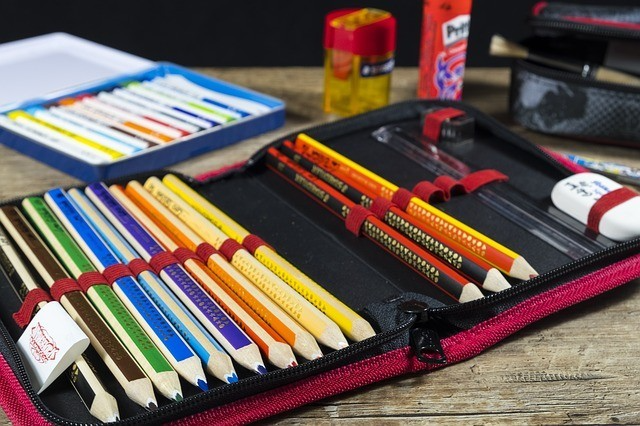
pencil case

Water bottles still clean and OK?

Does your school provide stationary or do they need a pencil case, pen, pencil etc

Some seniors need a scientific calculator, check with your school.

Do you have a school book bag, is this still in good enough condition?

If you’re super organised you could sort winter coats, hats and gloves out now ready, but I prefer to give myself a break before moving on to that!

Are They Ready?

It’s normal for children to feel nervous or excited about the first day of school. Make sure to have conversations with your child about their emotions and let them know that it’s okay to feel that way. You can also help ease their anxiety by:

  • Talking to them about what to expect on the first day of school
  • Encouraging them to share their feelings with you or a trusted adult
  • Reminding them of past successful transitions they have made

Going back to school means your child will have to be more independent. You can help them develop independence by:

  • Encouraging them to pack their own school bag and lunch
  • Teaching them how to manage their time effectively
  • Allowing them to make some decisions on their own

Positive conversations with your child can help them feel more confident and excited about going back to school. Here are some ways to encourage positive conversations:

  • Ask them about their day and listen actively
  • Encourage them to talk about their interests and hobbies
  • Help them practice social skills by role-playing conversations with peers

Are you ready?

We all let things slide through the holidays, late nights, lazy mornings, 300 snacks per pay and so on! but one of the best things you can do to make life easier for you and your child is get back into a routine!

Set a consistent bedtime and wake-up time, even on weekends. This helps regulate your child’s internal clock and ensures they get enough sleep. Create a schedule for meals, homework, and other activities, and stick to it as much as possible. Use a calendar or planner to keep track of important dates and events.

Lastly

Don’t forget to label EVERYTHING!!!

So are you ready? Let me know in the comments, have I forgotten anything? Please, please let me know if so!!

Not long left now.

Good luck!

girl at school with hand raised
Childminding

Recommended Childminding Resources

One of the first things pre registered childminders ask is what things they will need, there is no quick answer to this as there are many things you may find useful over the years, so here we will go through some of the childminding resources I have and would recommend;

Safety equipment

The only thing OFSTED advised me personally that I needed to have was a safety blanket, and this has to be attached to your wall in your kitchen, so this would definitely be a priority.

OFSTED also expect all childminders to have a fully equipped first aid kit.

Plug safety caps are no longer recommended there is new evidence that these can be more dangerous than an open socket, so don’t waste your time with these.

I use baby gates, I don’t have doors downstairs and use gates instead to keep the children out of the kitchen and my dogs where I want them, you don’t have to use baby gates this is definitely personal choice, though I would recommend door stoppers for your doors if you have them to prevent trapped fingers.

If children will be spending any time in your kitchen then you should invest in some cupboard catches, you can pick these up on amazon fairly cheap and they are easy to fit, it’s always better to be safe than sorry!

Travel equipment

If you don’t drive, please don’t worry, I know plenty of childminders that get on great without driving, but I do drive so here I’m going to cover some of the stuff I have for travel.

Car seats, buy these as and when you need them but you will more than likely end up needing a variety, hand held ones for younger babies, fixed rear facing ones and high back booster seats, the regulations on car seats has changed many times over the years so make sure you stay upto date with current requirements using the government website https://www.gov.uk/child-car-seats-the-rules, it’s also useful to weigh and measure the children often to ensure they’re still in the correct seats.

Pushchairs, I have 2 singles, a double, and a triple, again this is a very personal choice, I experimented and found I preferred a tandem double to a side by side. But then my triple is side by side and is a breeze to push………this is a baby jogger which I highly recommend! You also want to make sure you have rain covers and cosy toes for any pram you chose as you’ll be out and about in all weather.

Again you’ll want a first aid kit, these can be mini travel ones, I have one in my car and another under my pushchair.

Mealtime/drink equipment

Water bottles, children need to have access to drinking water at all times, so I find that sports cap type water bottles are the best for a busy environment………this way you don’t have to worry about cups being knocked over, you can ask parents to send these but I prefer everyone to have the same so no-one gets upset and you don’t risk parents sending juice.

I use one of these label makers to personalise our water bottles, you can use different colours and add little images along with the child’s name to make it easy for them to spot which is theirs, I also use it to make matching stickers for the children’s coat pegs and draws too.

You can get yours here https://keddykiddycare.com/labelmaker

Plastic cups, although you may have bottles children need to learn how to drink from a proper cup so we use plastic cups at meals and snack times.

Plates, knifes, forks, spoons etc. What I do, but you’ll find your own way is colour co-ordinate everything so each child has an apron, bought in bulk from amazon – https://keddykiddycare.com/kiddyaprons , plastic plate and cutlery (IKEA) in their colour, I find this helps them feel part of our home, and it’s very useful to me when dishing up meals.

Booster chairs/high chairs. I’m not a massive fan of highchairs but it’s useful to have one especially if you end up with a under one year old. Once they hit one I like them to join in at the table, so I’ve always been a fan of booster chairs for the table, they are easy to fit into your home without taking over and they add hight and security where needed. You can find the ones i like here https://keddykiddycare.com/boosterhighchair

Toys

I’ll try not to go on forever here as obviously there’s sooooooo many to choose from, I’ll start with my most recommended and work my way down, well I like them all but tried to rank them a little,

Books,

Fancy dress,

Play kitchen with foods, pots and pans,

Construction area,

Building blocks,

Small world play (peppa pigs, weebles, little people, barbies, dinosaurs, etc)

Ride ons,

Climbing equipment (inc swings and slide if possible)

Sand and water play,

Craft equipment (paints, pens, pencils, chalk,gliiter, glue, etc)

Puzzles,

Educational supplies (alphabet cards, number games, dominos etc)

Dolls and prams,

Transport play,

Hamma beads,

Loom bands,

Cuddlies and puppets,

Lego,

Tabet’s,

Camera’s,

Car tyres and wooden planks,

Musical instruments,

Magnifying glasses,

Play dough (including: cutters, knifes and rollers etc)

Other

Random items you may also need would be a printer, many parents need letters printing for proof of payment, I also print termly reports, and children like to have colouring pages printed off regularly, i use a HP Envy which has an instant ink option so you never run out of ink, this has been a game changer for me! Take a look here https://keddykiddycare.com/printer

Smartphone/camera……..I’m mainly internet based so these are a priority

Travel cots and baby monitor if you don’t have space available for children to sleep in sight

Outdoor clothing for children, I provide wellies and coats (normally gifted from local parents) and have a collection of waterproof trousers……..these are all for if the garden is muddy. children still attend in their own coats and shoes!

Wet wipes, changing mat, nappy sacks,

Spare everything…………….pants, trousers, tights, skirts, dresses, tops, sun hats, sun cream, gloves, woolly hats, scarves

Patience

and finally lots and lots of wine!!!!! For after working hours obviously.


Finally

Remember to keep receipts for EVERYTHING you purchase over £10, they can all be put through your accounts as expenses to reduce your tax bill.

I hope I’ve covered everything but I’m sure there will be something I have forgotten so please comment below if there is anything you would like to add or ask

Samantha x

Childminding

A little about childminding

So, here I’m hoping to give you an insight into my life as a UK childminder, so anyone considering a career in home based childcare please read on and I really hope you find this useful.

Be a full time mum and your own boss

My main reason to become a childminder was to enable me to stay with my own children, whilst earning money, so if you are a mum (or dad) desperately looking for a way to earn money whilst being around for your children then this might be the perfect job for you………… It also helps to quite like children!

I take my own children to and from school each day,

I manage to make most school assemblies and shows,

I never work a late night or a weekend,

My children have never been short of someone to play with,

I have freedom to spend the days as I choose (within reason, I can’t exactly have a glass of wine with lunch!)

Childminding ratios…… Who am I allowed to care for?

Once your fully registered there are 2 OFSTED registers: the Early Years Register and the Childcare Register as long as you join both of these you can provide care for;

A total of six children under 8 years,

Of which only three children under 5 years,

Only one of which can be under 1 years.

You can also provide care for children over 8 years old providing it doesn’t affect the care you are giving the younger children, your insurance will determine the maximum amount you can have and for a single childminder it’s normally around 12.

Childminding fees

Your fees need to be in line with others in your area, so do your research, don’t undercut people but don’t price yourself out of the market, parents will choose you as their provider when they like what they see, there’s more important aspects than just your price.

I found that just taking on one child full time provided me with the same income as my part-time call centre job, the child I had was the same age as my eldest daughter and they got on great, we had so much fun visiting parks, farms and much more just me, my 2 daughters and this one additional child.

If you were to fill all of your spaces, for example 3 children full time, and 3 older children before and after school each day you’d easily be making a decent income, where I am based here in Yorkshire that would equate to £750 a week (costs in 2022), but like I mentioned before fees vary a lot over the country and I’m led to believe here in Yorkshire is one of the lowest rates there are.


A typical day in the life of a childminder

I chose my working hours to be 7am – 6pm but this is your choice I know lots of childminders that don’t start till gone 8am, and some that close at 5pm, there’s even a few that just offer similar to school hours 9-3.

So I’m always up around an hour before, enjoy a coffee in peace, write out my register for the day, have a quick tidy round and gather my thoughts for the day ahead.

I wake my children around 6.45 so they’re dressed and downstairs for 7am

Children start arriving from 7am and I serve breakfast until 7.30.

Then they relax with TV in the living room or toys in the playroom

At 8 we get ready for school and set off on our school run at 8.15

I get home around 9am, I’m a big believer in freeplay and outdoor play so we tend to head out to the garden till 11, fruit is available when the children are hungry, we have

Water play,

Sand,

Playdough,

Musical instruments,

Books,

A climbing frame, with swings, slide, trapeze bar & ladder,

Mud kitchen,

Ride ons,

Trampoline,

Tyres and planks

Constuction area,

Chalk board and chalk,

Barbie house and toys

All available in the garden, the playroom is still open with too many toys to list, plus we have a craft room where we do painting, drawing, puzzles and games etc.

I normally manage a coffee in this time………. We watch the children playing, extending their play and supporting their language but without interfering.

At 11am I bring the children indoors, we have a tidy, I check nappies and change them if needed then I read a story before lunch, the benefit of working alongside my hubby is that he now makes lunch, but as a sole childminder I never found it a problem.

After Lunch everyone tries the toilet then we sing songs before I open the garden back up around 1pm.

Younger children tend to nap at this time.

The children then go back to their own play, using their imaginations and learning the whole time, we are always aware of our children’s capabilities and provide opportunities for them to progress further continuously.

A few of our under 5 year children leave around 3pm

We set off to school just before 3pm and walk there and back, I tend to work to my maximum numbers so normally collect around 6 children including a couple of over 8s.

When we get home they have some snack around 4.15pm then play till home time, the latest children leave at 6pm but we’re normally fairly quite by 5pm.

During the day we keep a register as children come and go, we record daily info for parents ie sleep, nappy changes, bottles etc. We observe and note any new learning or developments we see from the children. We take photos to share with parents. We keep the children safe and offer plenty of opportunities for learning following the same framework as nurseries.

This is an average day, we also enjoy going to our local playgroup every Thursday, we visit parks, farms, soft play, we walk our puppy, we go to feed the ducks, we even nip to tesco sometimes!

How to become a childminder in the UK…….

If you think this maybe the career for you, the first thing to do is get in touch with you local authority and they will support you through the registration process, which goes like this:

  • Complete an introduction course (around 20hrs)
  • Complete a 2-day paediatric first aid certificate
  • Be Disclosure and Barring Service (DBS) checked.
  • Have a health check completed by your doctor.
  • Have appropriate insurance cover, including Public Liability Insurance.
  • Apply to OFSTED who will come out and do a pre reg check, like an interview for you and a safety check of your home.
  • Ensure you are in the eyfs and compulsory childcare registers.

There’s lots of information out there on the legal requirements etc but what I wanted to do today was share a more personal insight as I can’t see much of that around (I guess most childminders are just too busy!) I hope you’ve found it useful and feel free to leave any questions and comments and I will get back to you.

There’s lots more I want to talk about….. How I track learning and development, advertising, communicating with parents, OFSTED and inspections, required paperwork and probably much more please let me know anything you’d like to know more on,

Samantha x

Parenting

The Best Potty Training Tips for Quick Success

After working in childcare for over 13 years I have potty trained many toddlers, both boys and girls, and have picked up some useful potty training tips along the way that I thought I’d share x

Don’t rush potty training your toddler

You need to wait until your toddler is ready, and this isn’t a number or age it’s about your child.

There is no point attempting to potty train a child that still can’t say the words wee, and poo (or whatever your preferred terms are).

I tend to start from a young age talking to the child whilst changing their nappy, saying which it is they’ve done, children then pick up the words and begin to tell you when they have done something in their nappy and this is the first sign they are getting ready for potty training.

Other signs of readiness include being capable of dressing and undressing their bottom half at least, being dry for longer periods during the day and taking a general interest in the potty and toilet.

I wouldn’t suggest attempting potty training before 18 months though as a general rule, 2.5-3 seems to be the best time these days but remember there’s no race, listen to your child.

Forget nappies

black mother changing diaper for baby

If you want your toddler potty trained you have to step away from the nappies, they don’t see or understand a difference just by showing them a potty.

The nappy feels like it’s always felt so they will do what they’ve always done.

I recommend decent disposable training pants, Huggies do some that are less absorbent, so your child can actually feel when they’ve done something, i highly recommend these, plus they come in great designs that kids really enjoy. 

Boys potty training pants (paid link)

Girls potty training pants (paid link)

or failing this move straight into pants.

​Plan Ahead

Before beginning toilet training it’s a good idea to be prepared.

Do you want to use a portable potty chair that you can have in your living room or will you go straight to the toilet? In which case you may need a potty seat and small step ready for your child.

Stock up on pull ups as mentioned above.

A reward chart with a small reward is also a good idea.

In the weeks before starting potty training a good idea is to let your child visit the toilet with you or an older sibling to make their potty training journey less daunting.

There are also some nice picture books focused around potty training that you could share as a fun way to introduce the potty, my son enjoyed this one Pirate Pete’s Potty.

Talk to other family members too so they know about this big change that your child is going through.

If your child attends child care it’s also worth speaking with them, they might have a policy you will want to be aware of, or be able to advise you of the potty-training process they use.

Think about what language you will use with your child, the best way is to use nice simple instructions that your child will clearly understand.

Accidents happen

Be prepared for accidents, like learning any new skill potty training doesn’t happen overnight!

If you have hard floors then it doesn’t take long to clean up a little puddle, and if you don’t I recommend getting outside as much as possible so any accidents happen there.

Spring and summer are a good time of year for potty training, as well as the weather allowing you to be outside more it also means your child wont wet or spoil as many clothes, and any extra washing you do end up with can dry on the washing line!

photo of underwear hanging on clothes line

Don’t be cross with your child if they have an accident and try your hardest to not revert back to nappies (unless you genuinely think the child isn’t ready)

Going out can also be difficult, always keep an eye out for public restrooms and give your child as many opportunities to go as possible to minimise the risk of accidents.

The potty or the toilet is also a big question we hear a lot, I don’t think it matters, I potty trained my daughters using a potty in the living room, my son a plastic urinal upstairs and most childminded children now straight to the toilet.

Do what feels right for you, experiment and see where your child seems more comfortable, and go with that.

Routine

It helps to have some routine in your child’s life.

Often even when children are still in nappies they become regular, make a mental note of when your child most often has their soiled nappies and remember this when moving into pants, get them to try the potty/toilet around this time.

I also suggest always asking them to try the toilet at regular intervals and times such as after a meal and before leaving the house, everyone at my setting tries the toilet before leaving the house, even myself!

If you’re at home, just you and your child I recommend encouraging them to mirror you, so every time you need the loo, you take them along and ask them to try, this is a great way of turning potty training into a joint experience that they want to share with you, but don’t push it.

Be proud

Children love to feel they’ve pleased you so offer lots of praise, tell them they’re clever, that you’re proud of them, that they’re doing a great job, they’re really growing up!

Sticker charts are known to work well but more than anything they’ll benefit by knowing that they are making you happy!

Using positive reinforcement to celebrate your child’s potty training success will be far more effective than focusing on any accidents that may occur. 

New pants

Make a big deal about going out and choosing new pants, look out for your child’s favourite characters such as Peppa Pig or Spiderman, something your toddler is really going to like, the more special the new pants feel, the less likely they are going to want to have an accident in them

Dry nights

Being dry during the night is another big step so again don’t rush this, wait until you’ve got daytime fully dry and you’re confident that your toddler has cracked it them move on to nights.

My favourite tip for nighttime training is to ‘double bag’ you’re child’s mattress.

What this means is layer it up, a waterproof mattress protector, followed by a sheet, followed by a waterproof mattress protector then another sheet.

This way if they happen to wet the bed you can normally just whip off the first sheet and protector, throw them in your bathtub in you’re half asleep mode and your child already has a fresh set on the bed to continue their nights sleep!

A quick change and wipe of your child is much easier than making the entire bed!

Just don’t forget to wash those sheets the next morning!

Generally a child will become night trained between 18 months and 8 years, so please don’t worry if it takes a little time each child will do it at their own pace.

Thanks for reading, I hope this is of some use, if anyone has any tips of their own please add them in the comments

GOOD LUCK!